
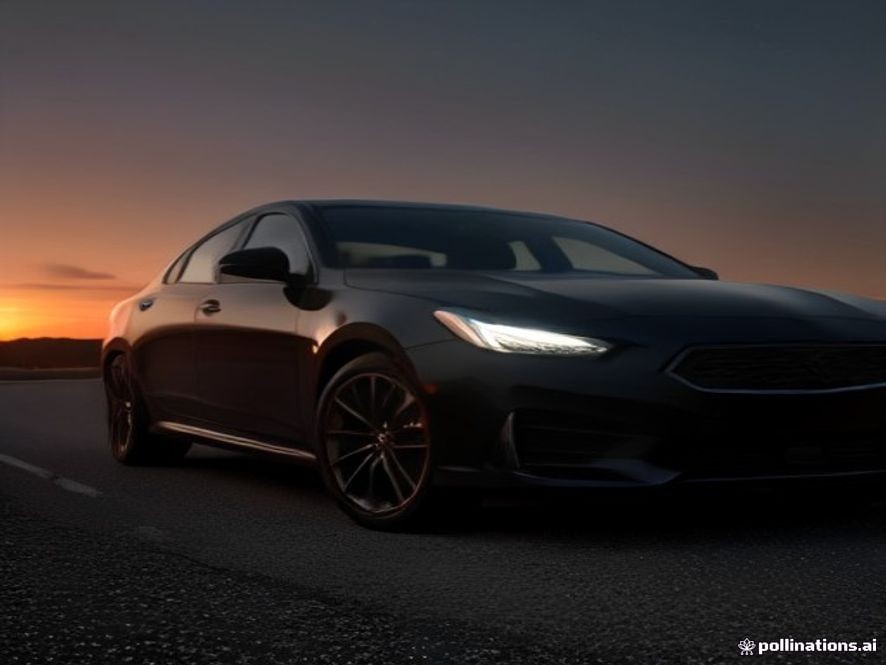
Hyundai Elantra N Daily Driving: Comfort vs. Track Mode Performance
There’s a moment every Elantra N owner experiences. You’re sitting in traffic on a Monday morning, and the car feels almost normal. Quiet. Compliant. Then you press the N button, and the whole personality shifts. The exhaust barks to life, the suspension tightens, and suddenly you’re not commuting anymore. You’re driving.
That duality is the Elantra N’s greatest trick. It doesn’t make you choose between a livable daily and a weekend toy. It hands you both, and lets you decide which one you want at any given moment.
TL;DR: The Elantra N genuinely works as a daily driver in Normal and Eco modes. The suspension softens, the exhaust quiets down, and you can pull 30+ mpg on the highway. Switch to N mode and it transforms into a track-ready machine with sharper steering, firmer damping, aggressive exhaust crackles, and lightning-fast DCT shifts. The trade-off is real—stiffer bushings mean more road noise than a standard sedan—but for enthusiasts who want one car to do everything, it’s a remarkable balancing act.
Key Takeaways:
- Normal mode delivers comfortable ride quality, quiet exhaust, and EPA-rated 29 mpg highway
- N mode transforms steering weight, suspension stiffness, throttle response, and exhaust volume
- The Electronically Controlled Suspension (ECS) is the key to the dual personality
- Road noise is noticeably higher than a standard Elantra due to stiffer bushings and performance tires
- Real-world highway fuel economy can exceed EPA estimates, with Car and Driver recording 37 mpg in the DCT
- The DCT is the better daily choice, while the manual rewards weekend driving
- The car handles potholes better than most performance sedans, absorbing imperfections quickly
The Two Cars Inside One Elantra N
Hyundai built the Elantra N with a simple philosophy: performance shouldn’t require sacrifice. The car’s N Grin Control System offers five drive modes—Eco, Normal, Sport, N, and Custom—each tuning the engine, transmission, suspension, steering, exhaust, and stability systems differently.
The gap between Normal and N is dramatic. In Normal, you get a sedan that behaves. The exhaust valve stays closed, keeping volume low. The suspension damping softens to absorb bumps. The steering is light enough for easy parking lot maneuvers. Throttle response is relaxed. It’s a car you could hand to a non-enthusiast and they’d never suspect what lurks beneath.
Press the N button on the steering wheel, though, and the transformation is immediate. The exhaust valve opens. The suspension firms up. Steering weight increases. The throttle map sharpens. The DCT holds gears longer and downshifts aggressively. It’s not subtle. It’s not supposed to be.
“The transformation from basic transportation to smart, connected vehicles shows how automotive technology is evolving to make driving safer, more efficient, and more enjoyable for drivers of all experience levels.”
Comfort Mode: What Daily Driving Actually Feels Like
The Elantra N’s daily livability starts with its Electronically Controlled Suspension. In Normal mode, the dampers soften to a level that’s genuinely comfortable for commuting . Grassroots Motorsports noted that while the ride is firm, it’s “definitely comfortable enough for daily usage” and that “most potholes and large road imperfections were shrugged off relatively quickly” . That’s high praise for a performance car on broken city streets.
The seats deserve their own mention. The aggressively bolstered sport buckets hold you in place during hard cornering, but they’re not punishing during long drives. One reviewer did multiple two-hour stints without lower-back complaints . The rear seats offer more legroom than a Civic Type R, Golf GTI, or GR Corolla—genuinely usable space for adults .
Fuel economy in daily driving is better than you’d expect. The EPA rates the manual at 21 city / 29 highway / 24 combined, while the DCT manages 20 city / 27 highway / 23 combined . But real-world results can exceed that. Car and Driver recorded 37 mpg at 75 mph in the DCT during their highway fuel economy test . A forum owner reported getting 30+ mpg on highway drives while still enjoying the car’s performance .
The DCT is the better daily companion for most people. It shifts smoothly in Normal mode, handles stop-and-go traffic without complaint, and delivers better highway fuel economy than the manual.
The Daily Trade-Offs You Should Know About
The Elantra N isn’t a Camry. There are compromises, and you should understand them before buying.
Road noise is the biggest one. The 2024 model year brought stiffer bushings in the engine mounts, suspension, and subframe connections. This sharpened handling and reduced driveline lash, but it also increased noise, vibration, and harshness (NVH) in the cabin. Grassroots Motorsports measured 73-75 dB at 65 mph on a California highway—comparable to their stripped-out BMW 435i track car . It’s not unbearable, but it’s noticeable, especially on coarse road surfaces.
Interior rattles can develop over time. One long-term owner noted “the interior is creaking and rattling every now and then” . It’s a common complaint in this segment, but worth knowing.
No adaptive cruise control. Hyundai reserves that feature for non-N trims. If you do a lot of highway driving with stop-and-go traffic, this might matter to you .
Summer tires limit cold-weather use. The Elantra N comes with Michelin Pilot Sport 4S tires, which are fantastic in warm, dry conditions. But below 7°C (about 45°F), they get noisy and lose grip. Hyundai recommends winter tires for cold-weather driving .
Safety reminder: Always check your tire pressure monthly for optimal efficiency and safety in your Hyundai. The Elantra N’s performance tires are sensitive to pressure changes, and proper inflation affects both fuel economy and handling.
N Mode: The Track Car Emerges
Press the N button and everything changes. The exhaust valve opens fully, turning the Elantra N’s soundtrack from a muted hum to a proper performance car bark. The suspension firms up dramatically. Steering weight increases. The throttle becomes twitchy, responding to the slightest input. The DCT shifts become brutal and immediate, with rev-matched downshifts that sound like a race car’s paddle shift system .
The N Grin Shift (NGS) button on the steering wheel adds another layer. Press it and the engine’s overboost function temporarily raises output from 276 to 286 horsepower for 20 seconds. It’s a gimmick, but it’s a fun one—perfect for highway overtakes or that one corner where you want just a little more shove .
On track, the Elantra N punches far above its price. One reviewer at Laguna Seca noted that the car “rivals rear-wheel drive and some all-wheel drive cars costing thousands more” . The electronically controlled limited-slip differential makes corner exits sharp and addictive, virtually eliminating the front-drive torque steer that plagues less sophisticated hot hatches .
The TCR Edition takes this further with factory-installed track upgrades: forged wheels, four-piston monobloc front brakes, an adjustable carbon fiber rear wing, and Alcantara interior touches . But here’s the thing—a review of the TCR Edition concluded that the standard Elantra N is already so capable that the TCR’s performance advantages are marginal. The reviewer noted that “a thoughtful set of track-focused tires and braking upgrades would take an ordinary car remarkably far” .
A Car and Driver test recorded the DCT-equipped Elantra N hitting 60 mph in 4.8 seconds—a tenth of a second quicker than the much more expensive Honda Civic Type R .
The Transmission Question: Manual vs. DCT for Daily Duty
This is the decision that divides Elantra N buyers.
The six-speed manual is the enthusiast’s choice. It’s engaging, rewards skill, and makes even mundane drives more interactive. One owner learned to drive stick in their Elantra N and described the experience as “one of the most exciting and fun experiences I’ve had” . The manual also has a lower curb weight—around 3,200 pounds versus 3,300 for the DCT .
The eight-speed dual-clutch is the pragmatic choice. It shifts smoothly in Normal mode, delivers better highway fuel economy, and is faster in a straight line. Car and Driver recorded the DCT hitting 60 mph in 4.8 seconds versus 6.1 seconds for the manual . The DCT also includes N Power Shift and N Track Sense Shift, which preserve torque during upshifts and automatically downshift at corner entry on track .
For daily driving, the DCT is the smarter pick. It handles traffic effortlessly, returns better fuel economy, and is still brutally fast when you want it to be. The manual is more fun, but it asks more of you every time you drive.
Real-World Impact: What Owners Actually Say
The Elantra N community is passionate, and their feedback reflects the car’s dual nature.
One owner who daily drove their Elantra N through college described it as “super comfortable and spicy when I want” . Another forum poster praised the three-mode suspension, noting that Comfort mode filters out road imperfections well enough that passengers don’t feel every bump .
A Kelley Blue Book reviewer summed up the driving experience: “Shifts are lightning fast and the exhaust comes to life with pops and bangs. The fast shifts mixed with the exhaust note is addictive. The suspension becomes flat and stiff, downshifts are fast and right on time” .
The common thread across owner reviews is this: the Elantra N is not the most refined car in its class. It’s not the quietest. It’s not the most luxurious. But it makes you want to take the long way home, and that matters more than NVH measurements to the people who buy it.
“The Elantra N isn’t a cheap sedan desperately pretending to be a track car—it’s a remarkably capable track car that still happens to be an affordable four-door sedan.” — Reviewer, 2026 Elantra N TCR Edition
Comparison Table: Elantra N vs. Key Rivals for Daily Usability
| Model | Daily Comfort | Track Capability | Fuel Economy (Combined) | Starting Price |
|---|---|---|---|---|
| Hyundai Elantra N | Firm but livable; adjustable suspension | Excellent; track-ready stock | 23-25 mpg | $35,100 |
| Honda Civic Type R | Firmer than Elantra N; more refined interior | Excellent; higher ceiling | 22-24 mpg | ~$45,000 |
| VW Golf GTI | Softer; more compliant daily ride | Good; less aggressive than N | 28-34 mpg | ~$32,000 |
| Toyota GR Corolla | Harsher; less daily-friendly | Excellent; AWD grip | 21-24 mpg | ~$37,000 |
| Subaru WRX | Softer ride; more body roll | Good; AWD confidence | 21-26 mpg | $32,735 |
The Elantra N sits in a sweet spot. It’s more daily-friendly than a GR Corolla, more track-capable than a GTI, and thousands cheaper than a Civic Type R while matching or beating it in straight-line acceleration.
Custom Mode: The Best of Both Worlds
Here’s where the Elantra N gets clever. The Custom mode lets you mix and match settings from different profiles. You want the soft suspension of Normal with the loud exhaust of N? You can do that. You want sharp steering but quiet exhaust for a long highway drive? Done.
The custom mode options let you independently configure:
- Engine/Transmission response (Eco, Normal, Sport, Sport+)
- Suspension stiffness
- Steering weight
- Exhaust volume (Normal, Sport, Sport+)
- eLSD tuning
- Stability control settings
This is the mode most owners settle on for daily driving. You can dial in exactly the balance you want—comfortable enough for commuting, but with just enough edge to make every drive interesting.
One note from the owner’s manual: When you select SPORT+ exhaust mode and release the accelerator, the exhaust produces loud pops and crackles. Hyundai warns this “may disturb people nearby” in crowded areas, parking garages, and residential neighborhoods. Use responsibly .
The Bottom Line: One Car, Two Personalities
The Elantra N isn’t trying to be a luxury sedan. It’s not trying to be the quietest car on the highway. It’s not trying to be a Camry.
What it is trying to be—and what it succeeds at—is a performance car you can live with every day. The suspension softens when you need it to. The exhaust quiets down. The fuel economy climbs above 30 mpg on the highway. And then, when the road opens up or the track day arrives, it transforms into something genuinely special.
The trade-offs are real. Road noise is higher than a standard sedan. The interior uses some hard plastics. You’ll hear the occasional rattle. But for enthusiasts who want one car that does everything, those are acceptable taxes.
The Elantra N remains one of the best performance values on the market. It’s a car that makes commutes exciting and track days accessible, without asking you to sacrifice one for the other.
What’s your favorite feature on your Hyundai that’s transformed your driving experience? Share your automotive wins in the comments!
References:

